First stage - Ramp up
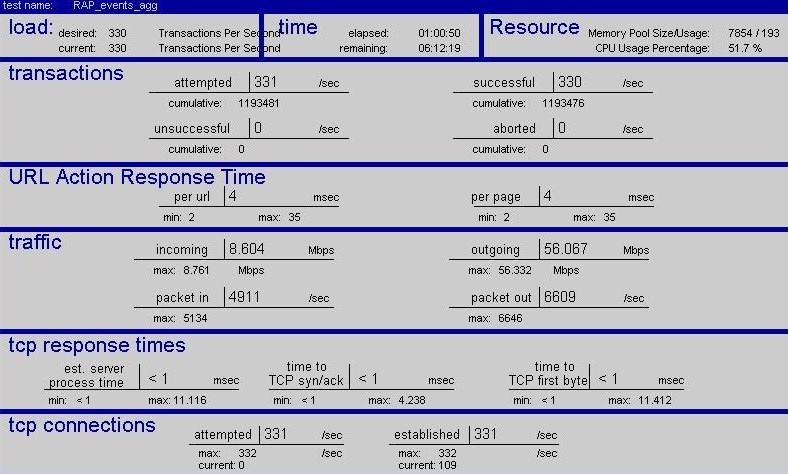
RAP enabled test include two load generators to ramp up, Endpoint simulator, as described in the previous chapter of this report, and RAP events injection using Avalanche.
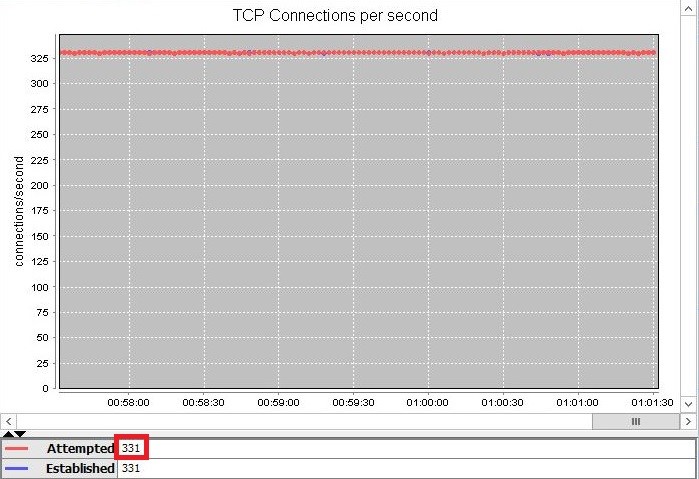
The limit for RAP event injection was found to be 330 messages per second, each containing 30 RAP events, to a total 9,900 events per second. Under the rate assumptions discussed in the methodology chapter, this rate corresponds with 23,890 endpoint clients.
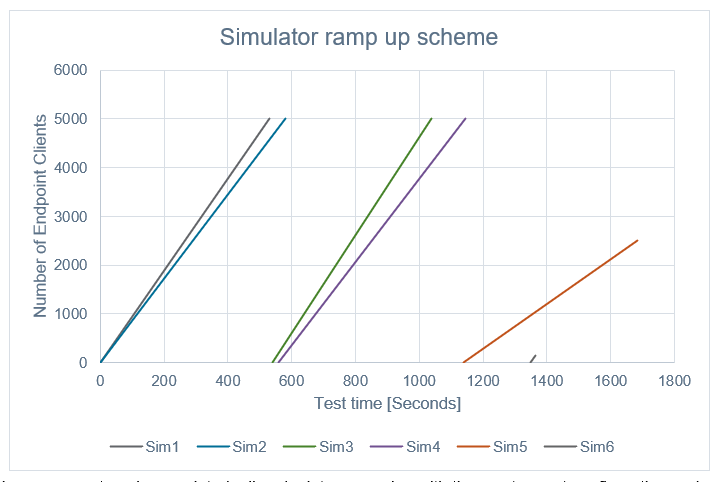
| # of Simulated clients | Startup Delay [Sec] | Delay between processes [mSec] | Total ramp up time [Sec] | |
|---|---|---|---|---|
| Simulator1 | 5000 | 0 | 5300 | 530 |
| Simulator2 | 5000 | 0 | 5800 | 580 |
| Simulator3 | 5000 | 540 | 6000 | 600 |
| Simulator4 | 5000 | 560 | 5850 | 585 |
| Simulator5 | 2500 | 1140 | 5450 | 545 |
| Incidents | 130 | 1350 | 5000 | 15 |
| Total | 22630 |
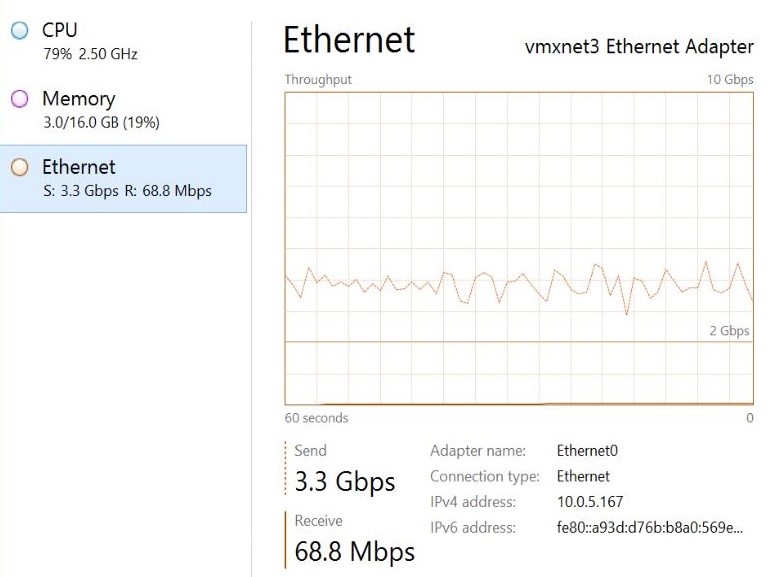
When the ramp up stage is completed, all endpoint are running with the most recent configuration and network utilization drops significantly.
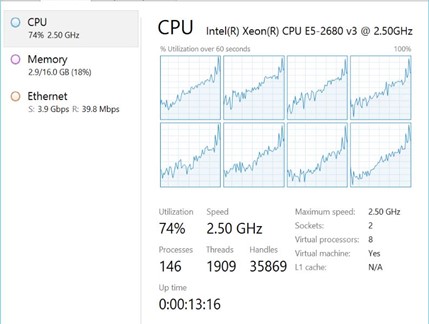
Note that relative to the EPS only section, the ramp up takes longer, with lower slopes. The ramp up was stretched in order to prevent the CPU to hit 100%, the extra overhead is caused by the RAP event traffic.
During the ramp up, RAP event injection was introduced at a rate of 9,990 events per second by 330 transactions per second, each holding 30 events. This translates to a total of 22,601 RAP enabled seats. The event injection continued at this rate throughout the entire test.
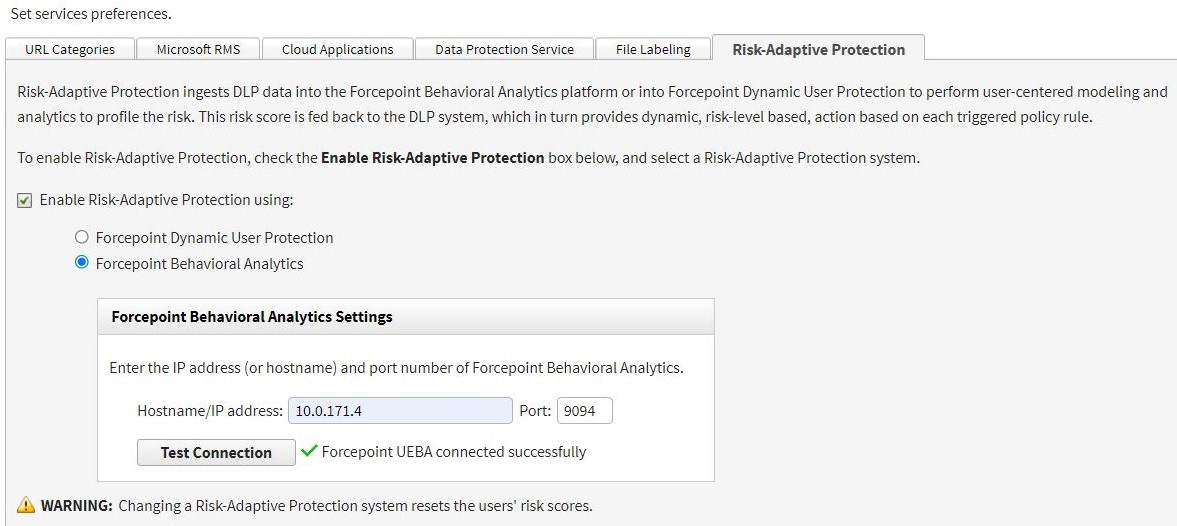
First screenshot – showing that RAP is enabled and connected successfully.
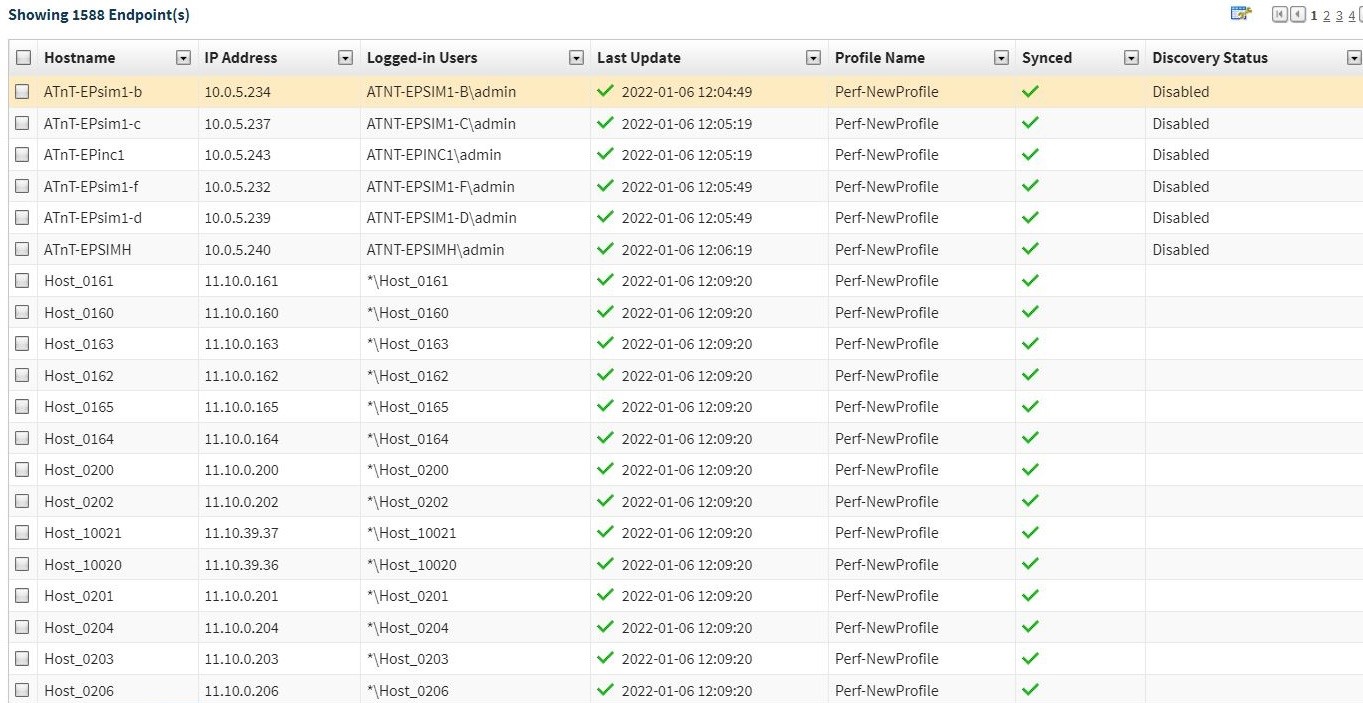
The second screenshot is taken right after the ramp-up stage started, after 1,582 endpoints already registered. The Hostnames that are named Host_##### are simulated endpoints. Note the Last Update time – this is the beginning of the update interval.
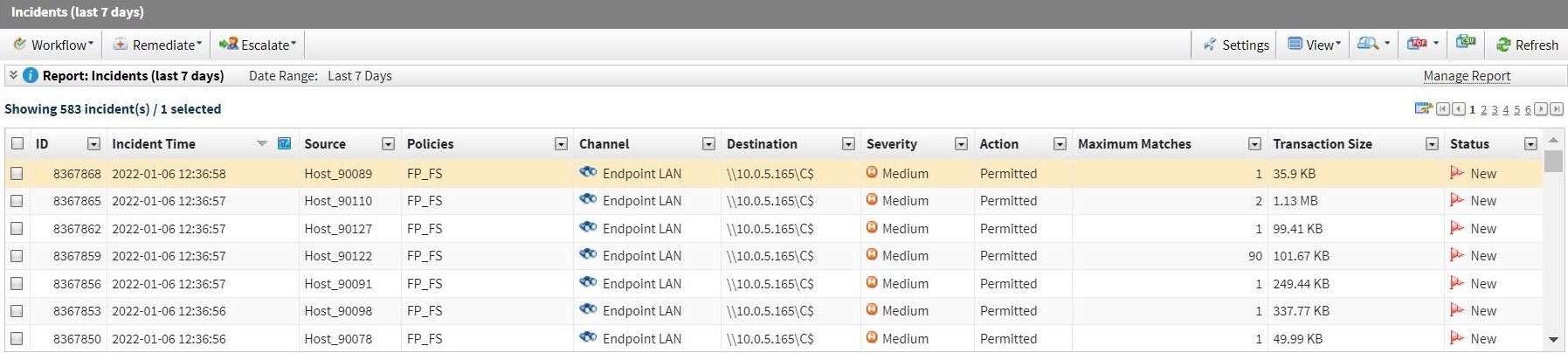
Towards the end of the ramp up phase, incident injection was also introduced as can be seen in the following screenshots. This injection remained active throughout the entire test.
This stage is the most resource intensive interval of the test as all endpoints download all configuration components.
The bottleneck for this stage, and therefore the entire test was the Endpoint server CPU utilization.
The ramp up interval is followed by an idle interval, where no updates take place. In this interval only endpoint pings, RAP events and incidents are being sent from the clients to the endpoint server. As expected, resource utilization is very low during this idle interval.