Create Custom Profile
The Create Profile editor can be used to create custom profiles. If the administrator wants, then they can select the Inherit default profile option provided with each widget to apply the values from the default profile.
Profile Details
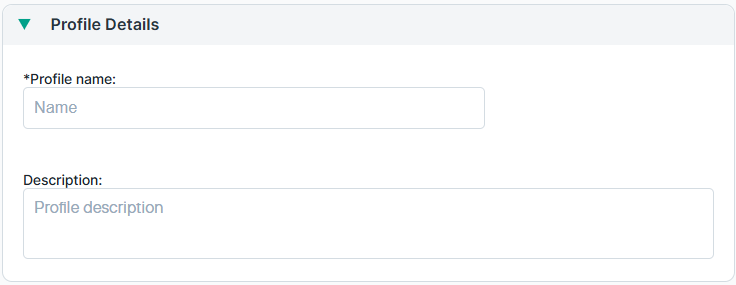
Profile name: Each profile is stored using the provided name.
Description: Brief description of the profile.
Applies to:
Use this section to define the scope to exclude or include in the profile. The scope defines the endpoints or organizational units which should be subjected to this profile.
The selection list is limited to 100 entries. Use search to find additional endpoints or OUs.
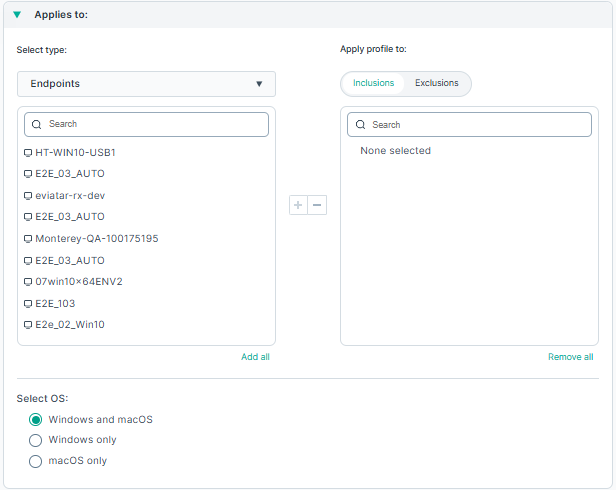
In the Search option, enter the resource name, then click  to add to the list
for either inclusion or exclusion. You can also use the Add all or Remove all options to remove or add multiple entries. Similarly, you can use
the
to add to the list
for either inclusion or exclusion. You can also use the Add all or Remove all options to remove or add multiple entries. Similarly, you can use
the  to remove entries that were added earlier for either exclusion or inclusion.
Also, from the Select OS: option select the operating system running on the endpoint machine.
When including an OU or endpoint in the "Include" list all other OUs and endpoints are excluded. The "Exclude" list overrides the "Include" list. It is used, for example, to select an OU but exclude specific endpoints that belong to this OU.
General
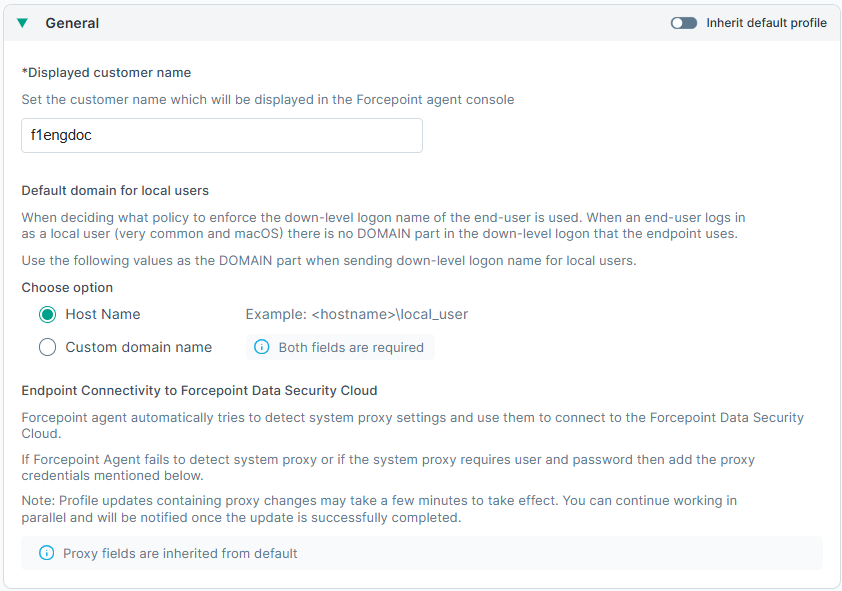
- Displayed customer name: Set the customer name that is displayed on the Forcepoint agent console.
- Endpoint Connectivity to Forcepoint Data Security Cloud: Allows manual configuration of proxy settings for proxies that require authentication.
Customer Logo (Applies to Default Profile Only)
You can add a custom company logo for Forcepoint Data Security Cloud | DLP agent installs using this widget.
Uploading the Logo
- Click Select logo to select and upload the image file.
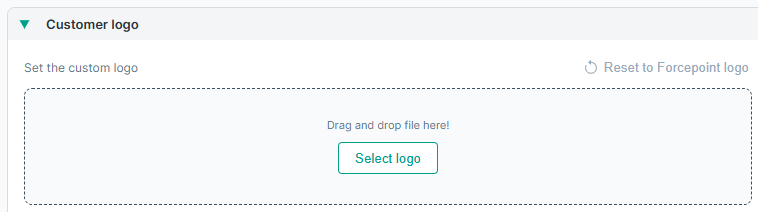
- After the file explorer opens, browse and select the image you want to upload. Only PNG images of dimensions of 300 x 50 pixels and a maximum size of 50 KB are supported.
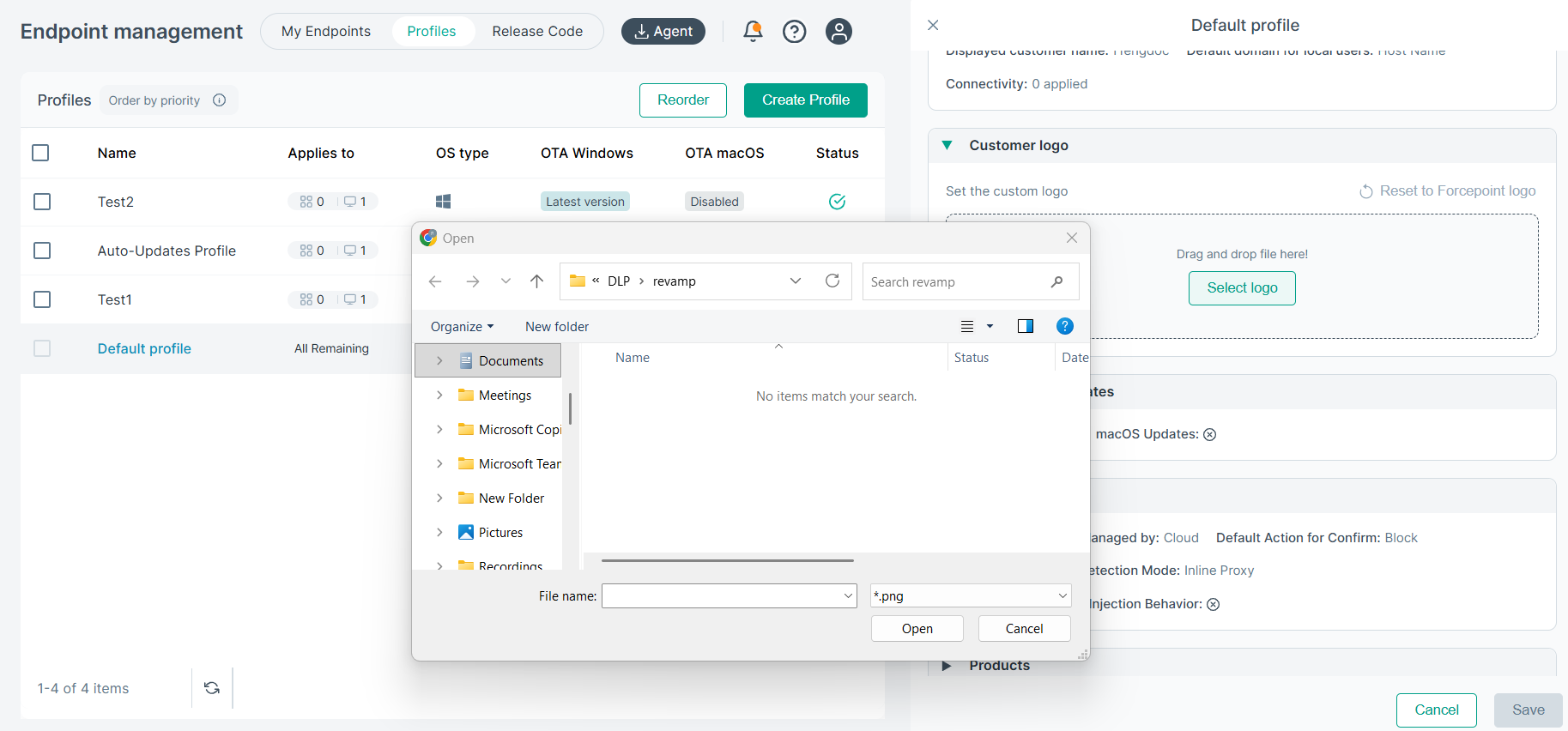
Only one logo is allowed per tenant. Uploading a new logo replaces the previous one.
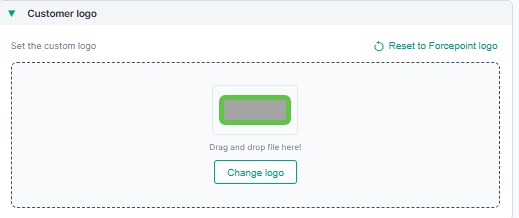
The uploaded logo will appear both in the agent coaching dialog and in alert email notifications.
- To update or remove the previously uploaded logo, click the Change logo button and upload the new logo.
Over the air updates
Displays which agent software versions are pushed to the endpoints. Values are inherited from default profile settings. Over the air updates can be enabled or disabled from the Default profile. Also, administrators can either opt for automatic updates or select specific agent versions to update from the Default profile. If Update to a specific version is selected, then the drop-down can be used to select the exact agent version of the agent to update to.
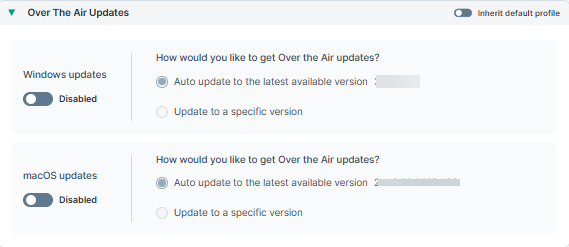
Administrators can choose to enable the option Inherit default profile if they want to inherit the settings from the default profile.
Data Protection
The Data Protection widget enables users that have Data Protection license to disable or enable it. Administrators can choose to enable the option Inherit default profile if they want to inherit the settings from the default profile.
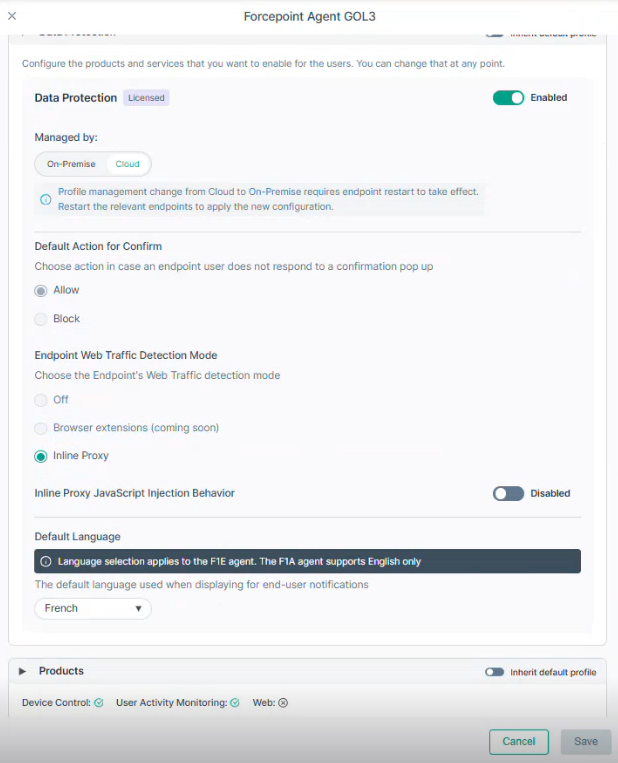
This Windows agent does not support inline proxy or browser extension. It uses a different web inspection method called application and SSL hooking.
Administrators can choose to enable the option Inherit default profile if they want to inherit the settings from the default profile.
- English
- Dutch
- French
- German
- Italian
- Japanese
- Korean
- Portuguese
- Russian
- Simplified Chinese
- Traditional Chinese
- Spanish
Products
Lists the features available and the license requirements.
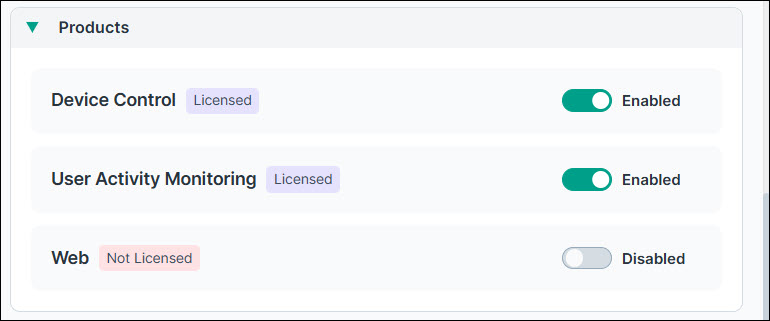
- Device Control
- User Activity Monitoring
- Neo web
If the customer does not have a license for one of the above products, the respective enable/disable toggle will be disabled.
Administrators can choose to enable the option Inherit default profile if they want to inherit the settings from the default profile.
Application Bypass
Administrators can exclude specific applications from DLP monitoring on Windows and macOS endpoints.
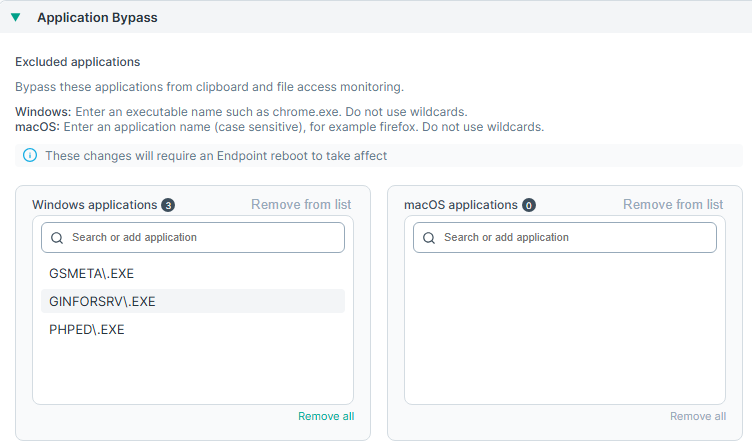
In the Search option, enter the application name, then click Add <app> to list to add applications to the list.
- For Windows, enter an executable name such as chrome.exe.
- Do not use wildcards.
Select the application name from the list and click Remove from list to remove the application.
Administrators can choose to enable the option Inherit default profile if they want to inherit the settings from the default profile.