Registering an app for iManage on-premise
Steps
-
Click username in the upper right corner and click Control Center.
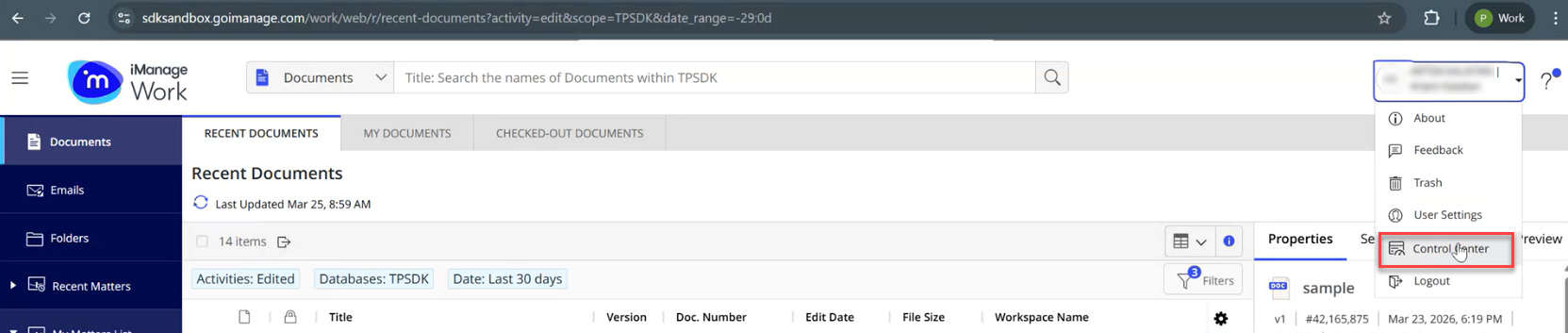 Note: Only users with admin role have access to Control Center.
 -
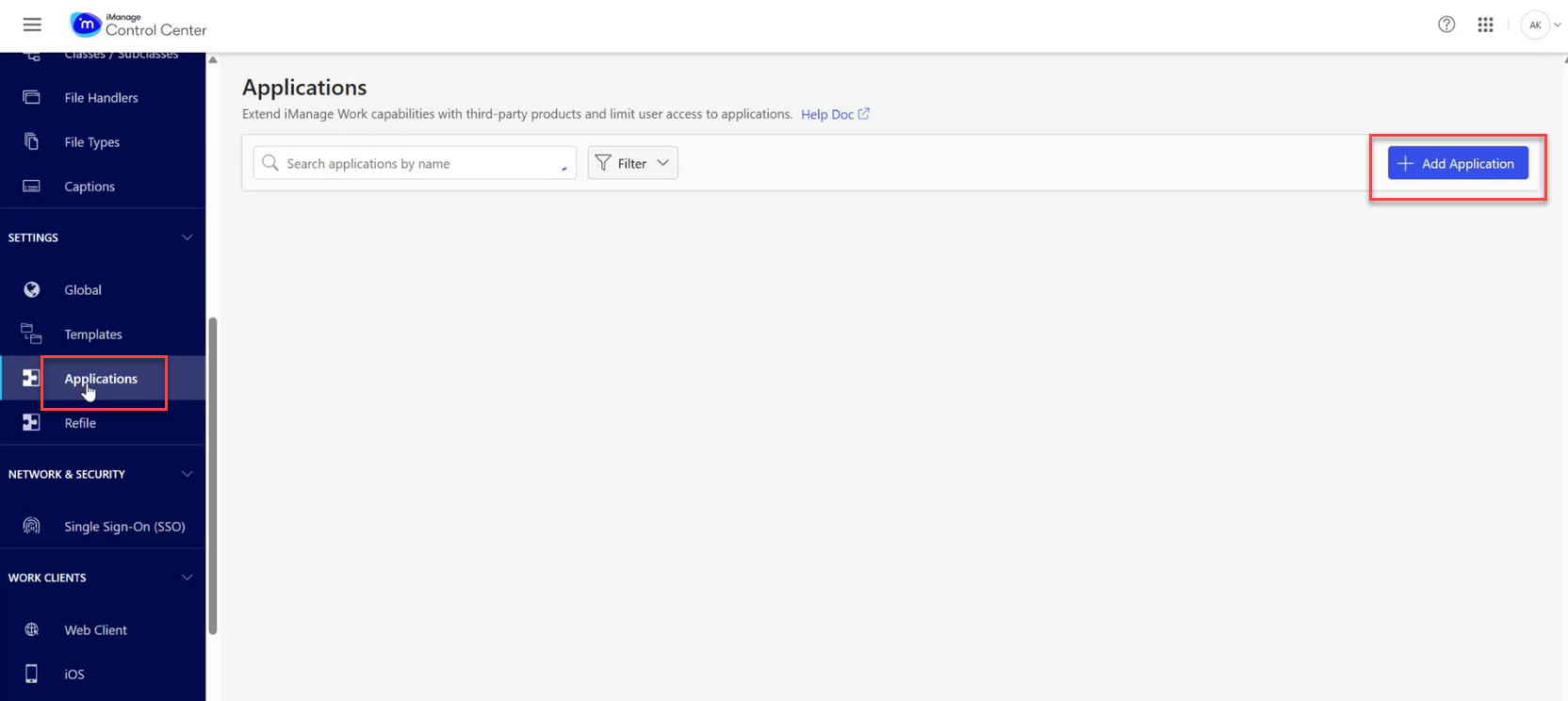
To add an application, go to the Applications menu item and click Add Application.
-
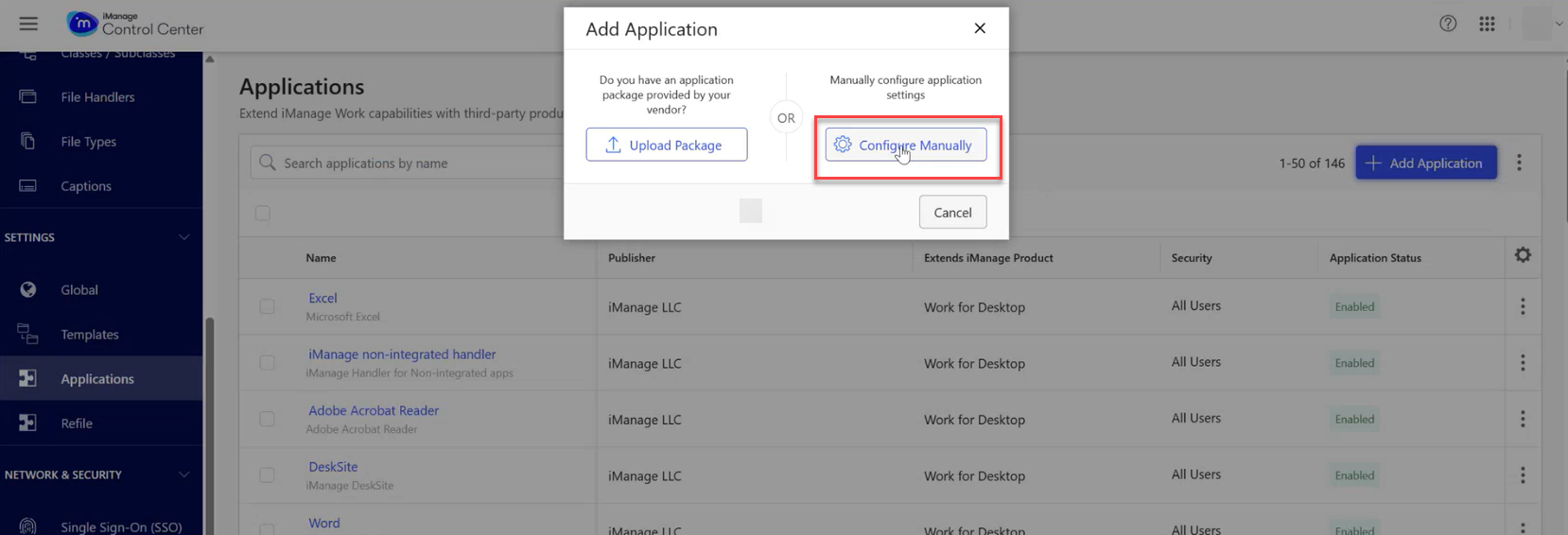
Click Configure Manually.
-
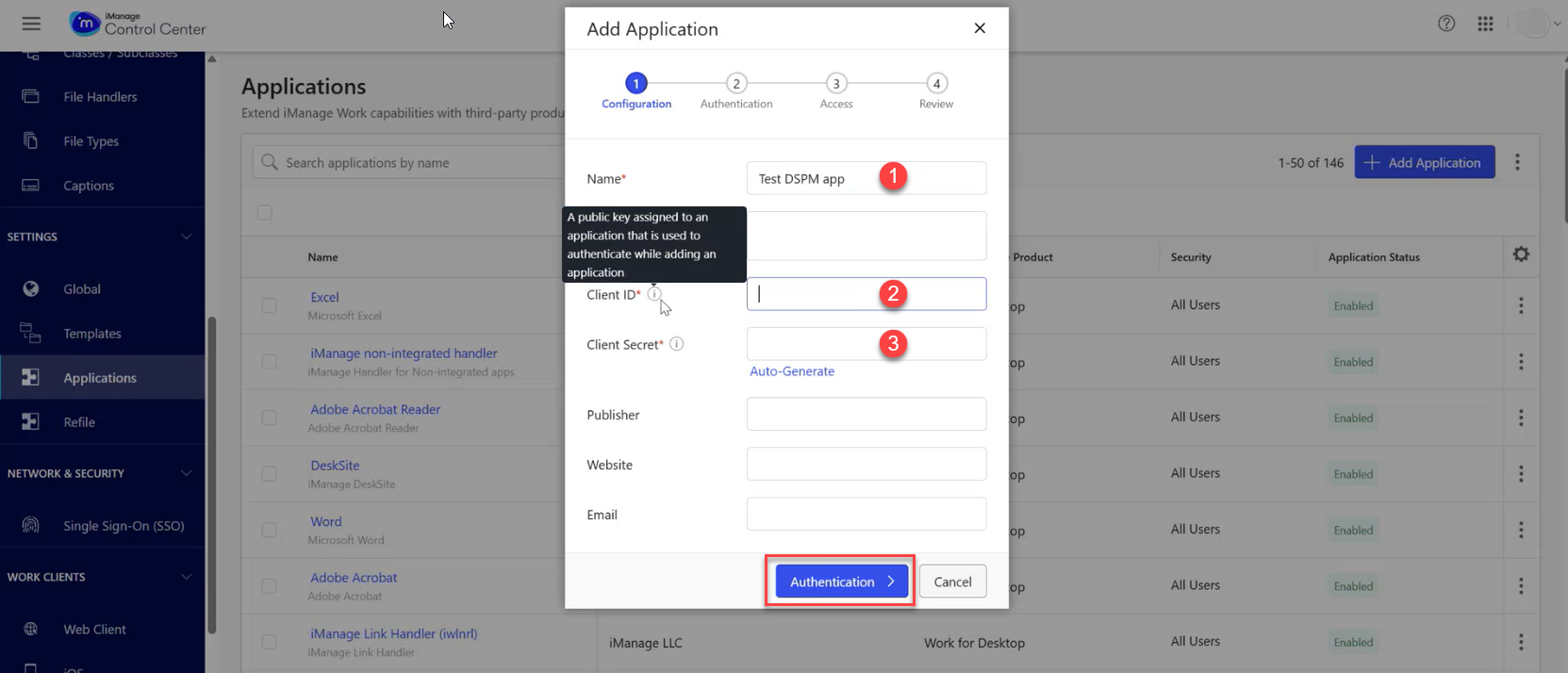
Provide the below mentioned details and click Authentication.
- Application name
- Client ID: Provide a unique Client ID in UUID (GUID) format. You may generate this using any standard UUID generator tool.
- Client Secret: Click Auto-Genrate to auto populate the Client Secret.Note: Make sure to note down the Client ID and Client Secret.
-
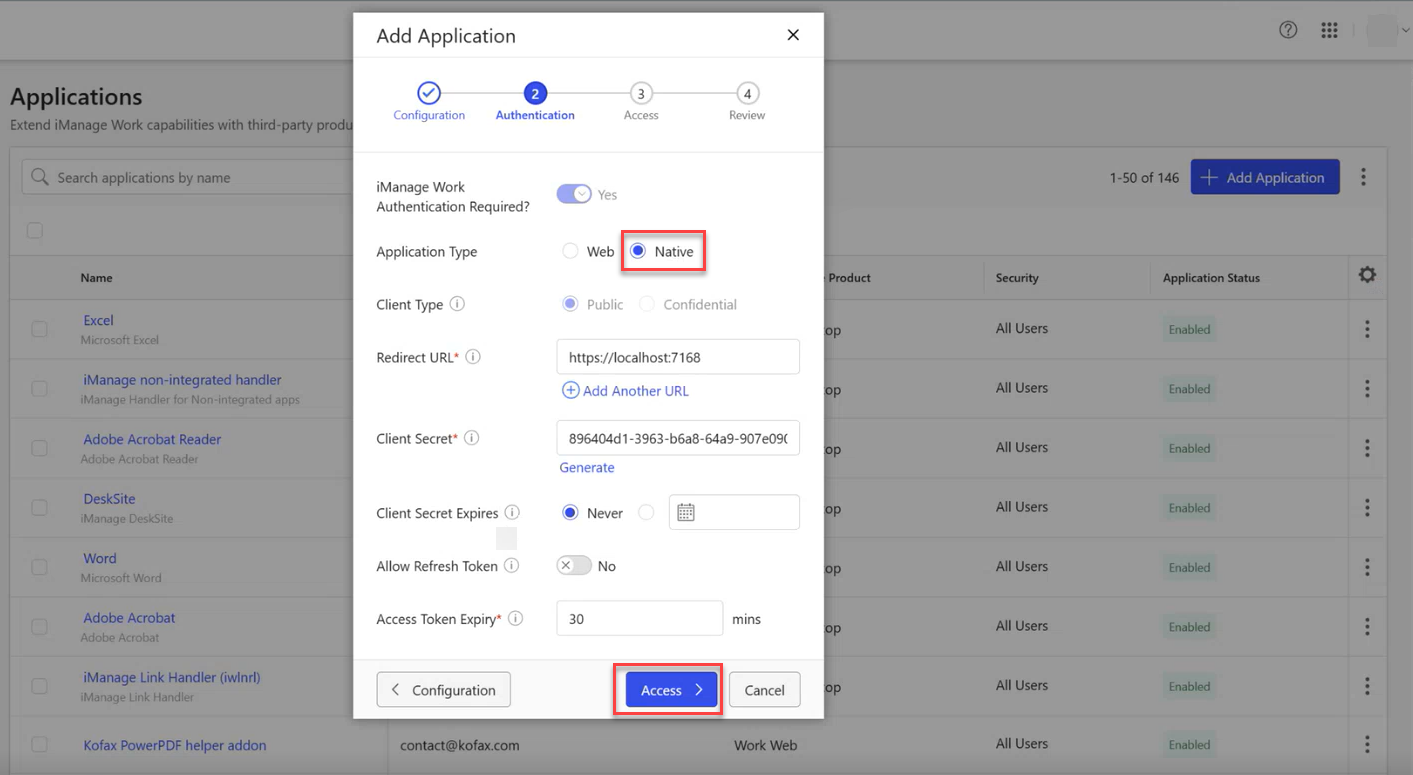
On the Authentication window, provide the below mentioned details and click Access.
- Application Type: Select Native.
- Provide the Redirect URL.Note: The Redirect URL is mandatory in the UI but not used by the connector, so any valid URL (such as https://localhost) can be provided.
- Client Secret Expires: Select Never or choose the expiry date.
-
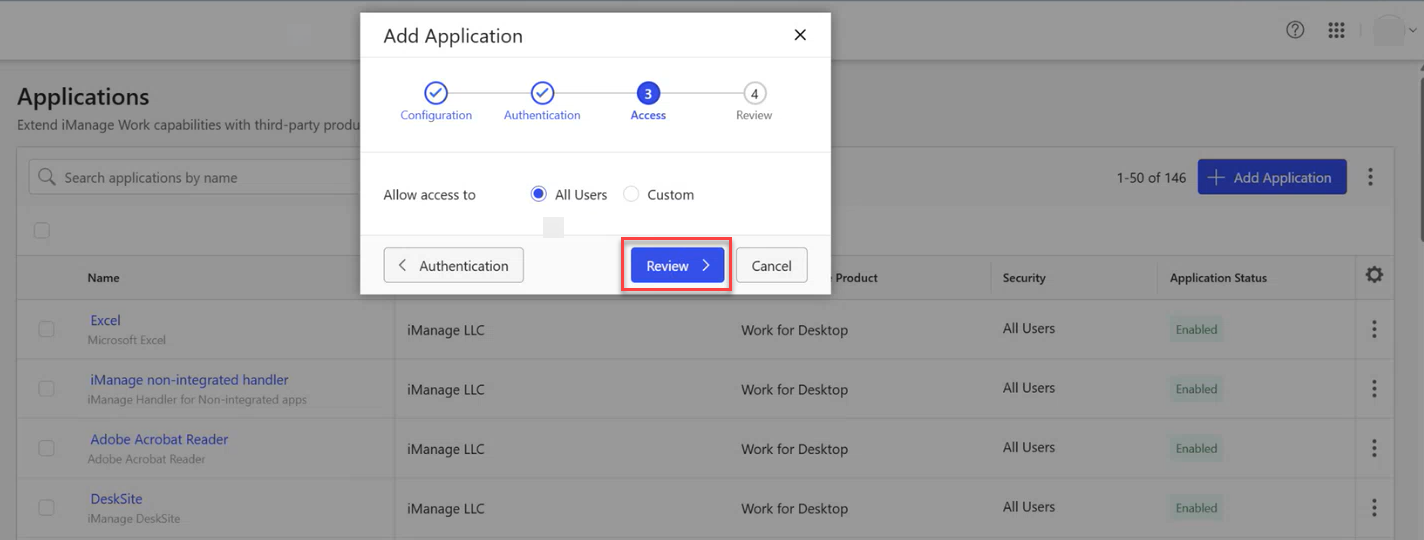
On the Access window, Allow access to to All Users or choose Custom to select specific users and click
Review.
-
Review the Configuration, Authentication, Access settings and click Finish.
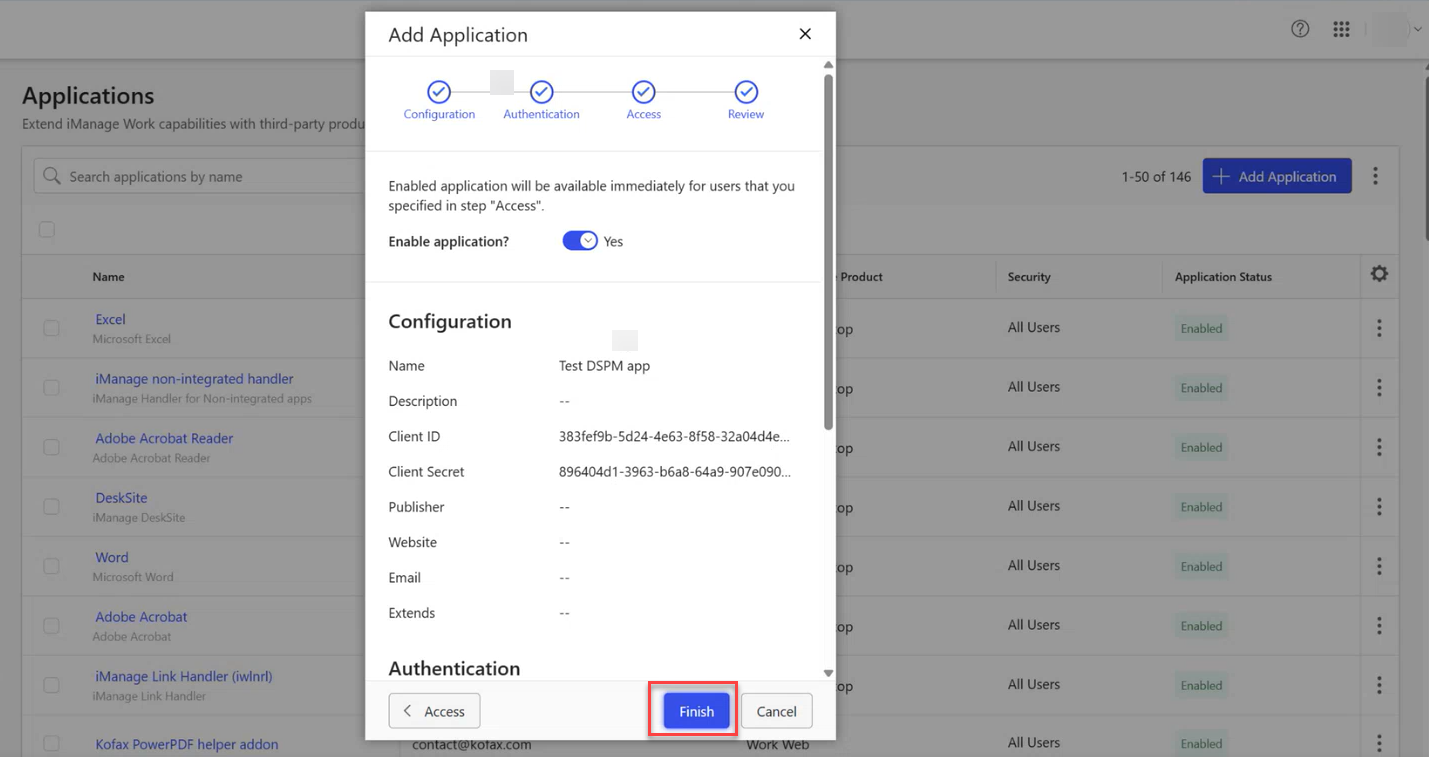
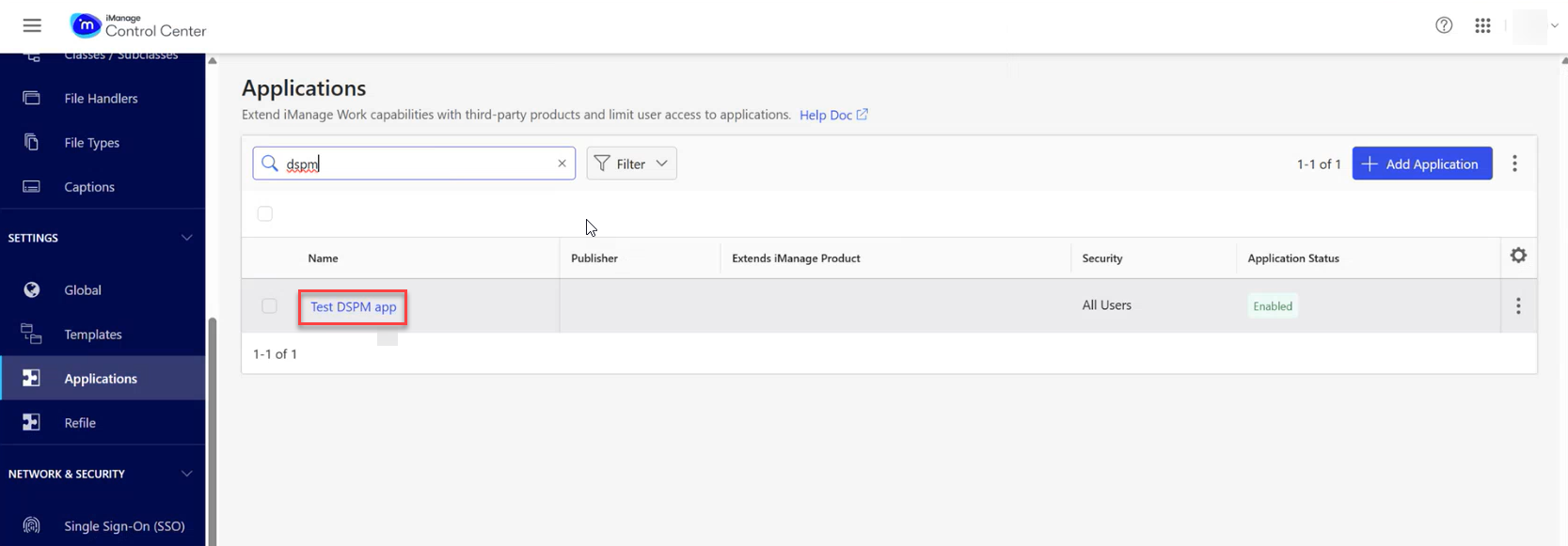
The newly added application is listed under Applications.
-
Customer ID should be provided by iManage admins, but if it is not provided, it can be retrieved from the /api response.
- Get Access Token
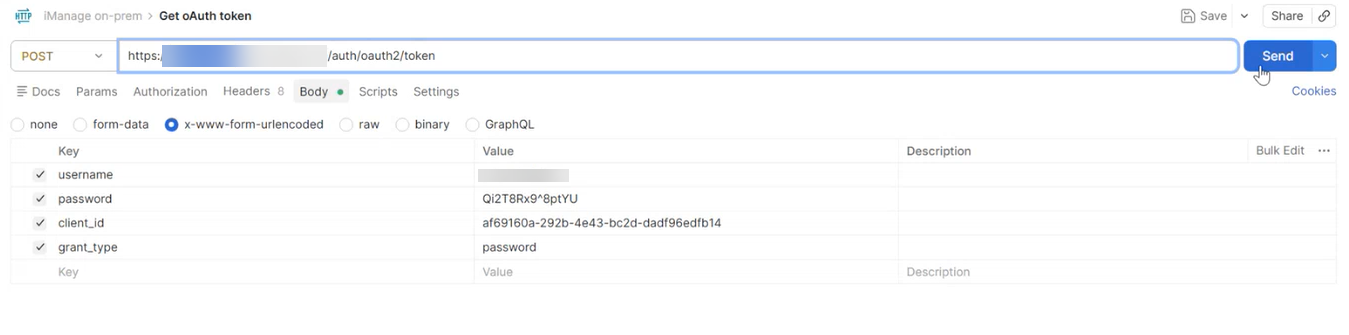
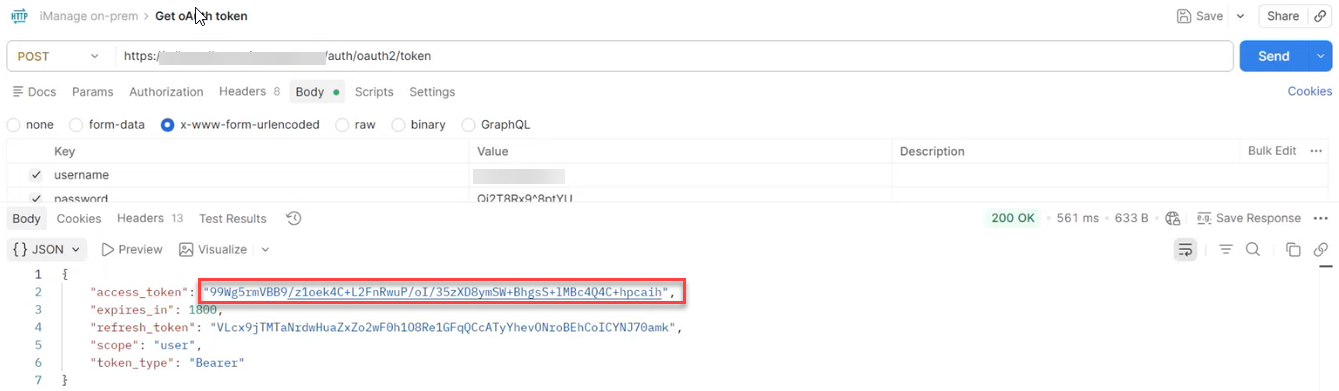 The
Thecurlcommand to get the Access token:curl -k --location "https://{hostname}/auth/oauth2/token" --header "Content-Type: application/x-www-form-urlencoded" --data-urlencode "username={username}" --data-urlencode "password={password}" --data-urlencode "client_id={client_id}" --data-urlencode "grant_type=password"Note: The username, password, client ID, and host values will vary by customer. - Get Customer ID
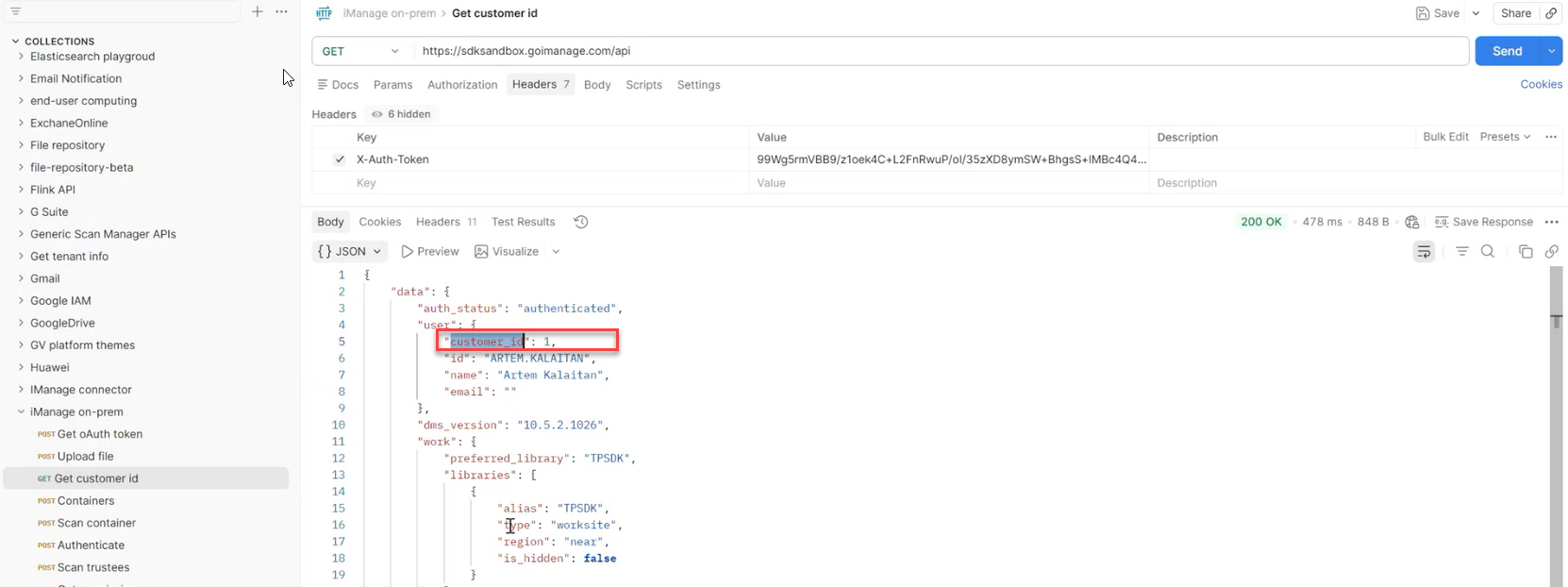 The
Thecurlcommand to get the Customer ID:curl -k --location "https://{hostname}/api" --header "X-Auth-Token:{access_token}"Note: Replace theX-Auth-Tokenvalue with theaccess_tokengenerated above.
- Get Access Token
-
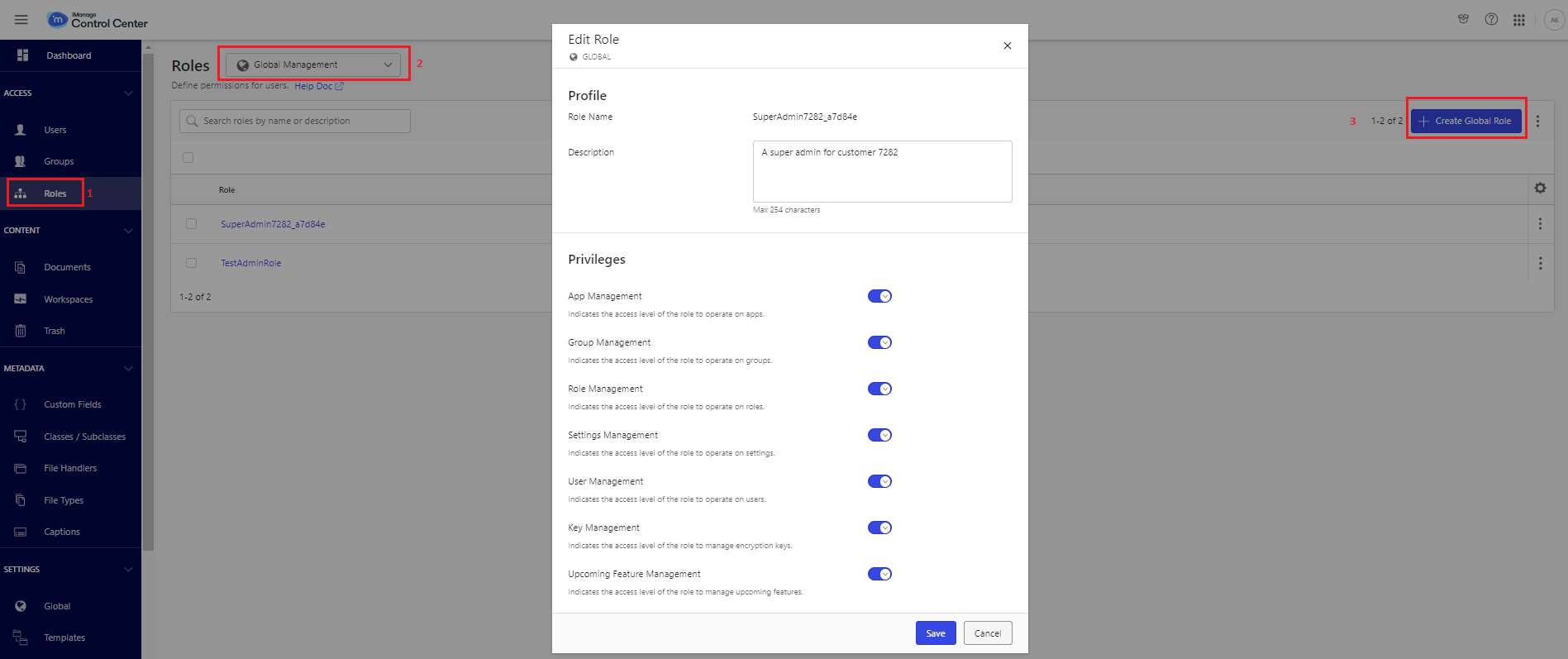
Go to the Roles menu item and set the following:
- Select Global Management to setup admin roles. Enable the necessary options.
- Select Library-level Management to setup library roles.